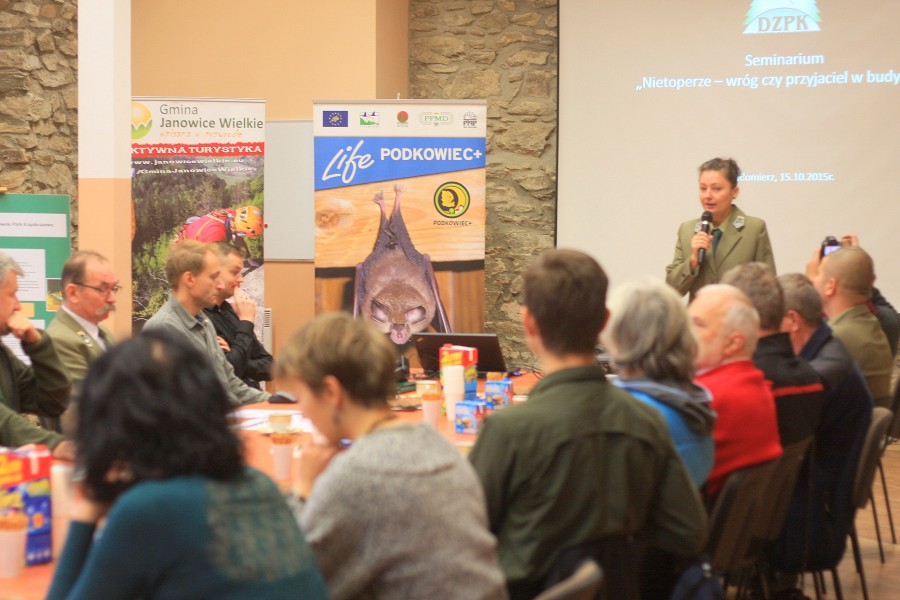
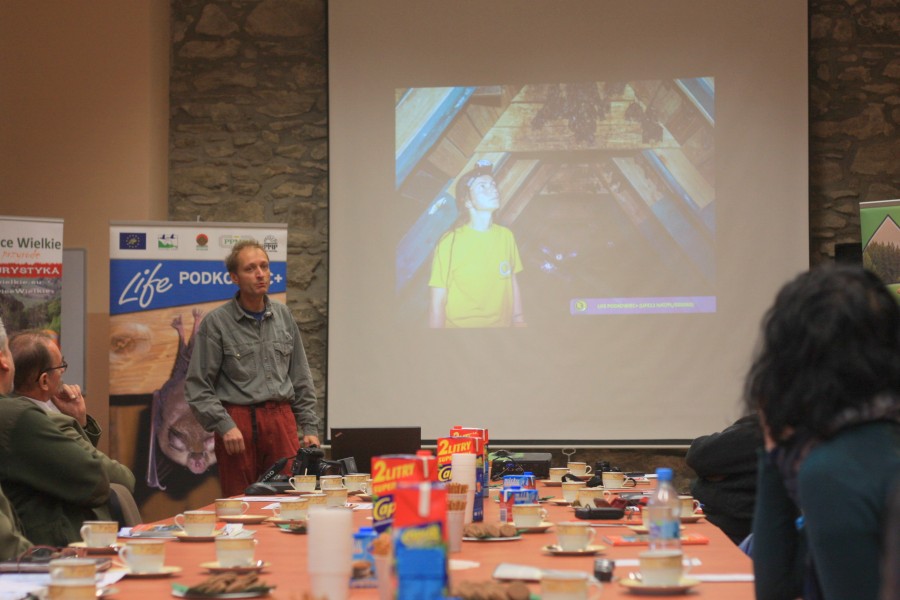
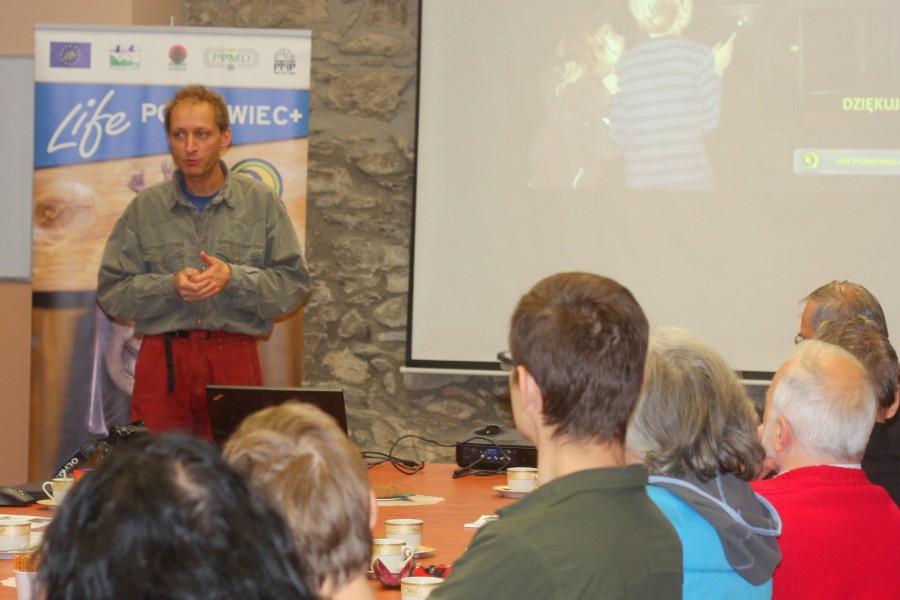
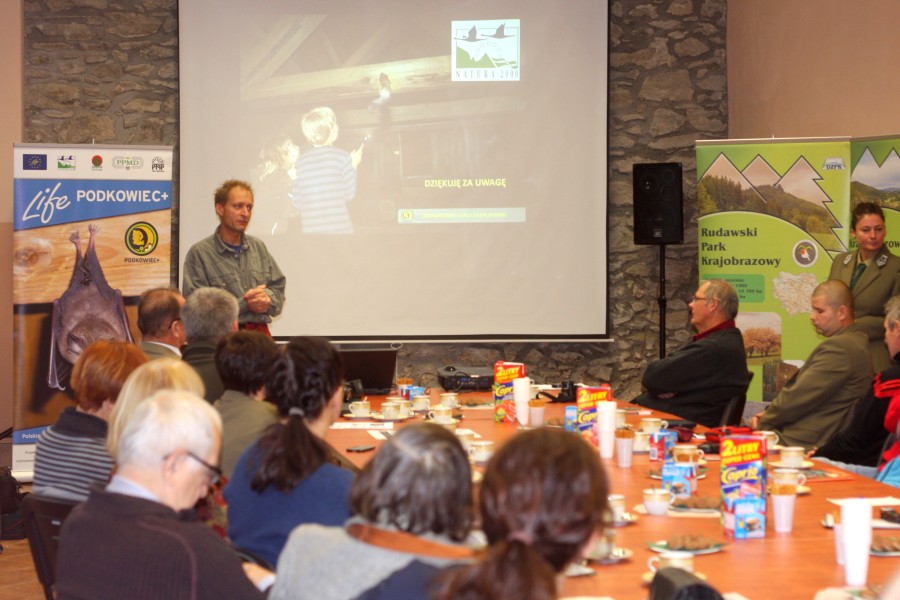
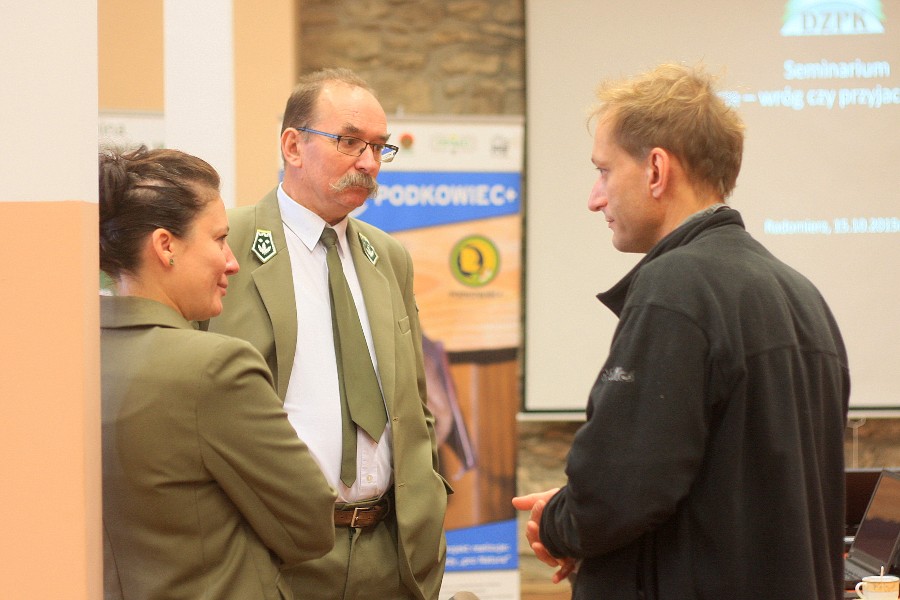
Thursday, 15th October, 2015, a seminar Bat – enemy or friend in a building? took place in Radomierz, near Jelenia Góra. Among the participants were staff of national and landscape parks and other public administration institutions.
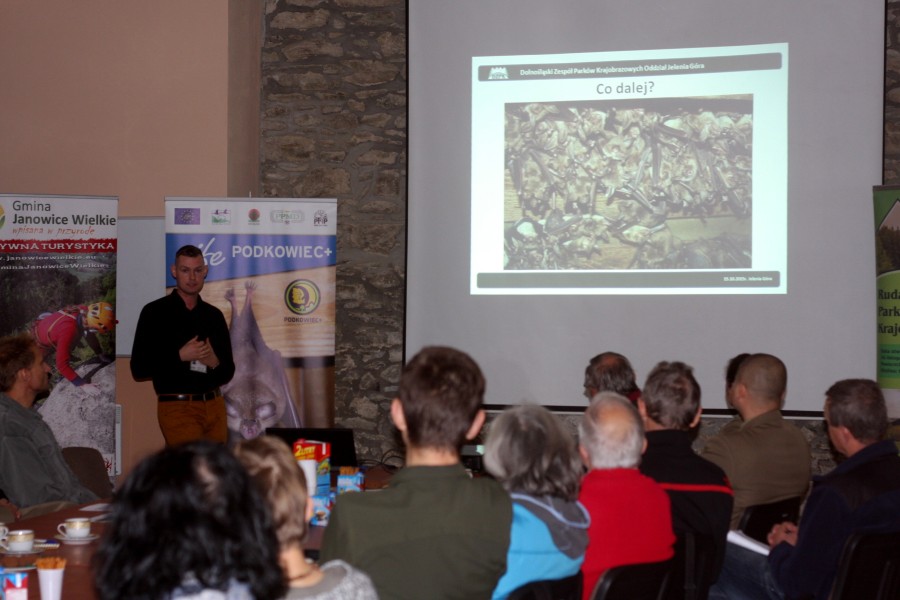
Life Podkowiec+ coordinator, Rafał Szkudlarek presented the activities of the project in the Kraina Podkowca (Land of the Horseshoe Bats). Rafał’s presentation shown how the bats use the buildings, and how to find out they do. It is not often to see the animals themselves, sometimes only traces are visible or squeaks may be heard. Oftentimes, the bat droppings accumulate on the attic, and cause a problem. Rafał explained the ways to solve guano problem, and using the examples from real activities shown the methods to improve habitat for bats, from sustaining the existence of the building and thus the colony itself, through roof replacement through to the adaptations leading to the improvement of the thermal conditions, light intrusion or draughts.
Life Podkowiec+ coordinator, Rafał Szkudlarek presented the activities of the project in the Kraina Podkowca (Land of the Horseshoe Bats). Rafał’s presentation shown how the bats use the buildings, and how to find out they do. It is not often to see the animals themselves, sometimes only traces are visible or squeaks may be heard. Oftentimes, the bat droppings accumulate on the attic, and cause a problem. Rafał explained the ways to solve guano problem, and using the examples from real activities shown the methods to improve habitat for bats, from sustaining the existence of the building and thus the colony itself, through roof replacement through to the adaptations leading to the improvement of the thermal conditions, light intrusion or draughts.
After all the presentations, including those of Wojciech Zawadzki and Marek Cieślak from the Lower Silesian Landscape Parks headquarter it was clear from the seminar, that assuming good cooperation between building managers, NGOs involved in bat conservation and public administration, the conservation efforts may bring a great success. The examples of experience presented at the seminar well illustrated such conclusion.