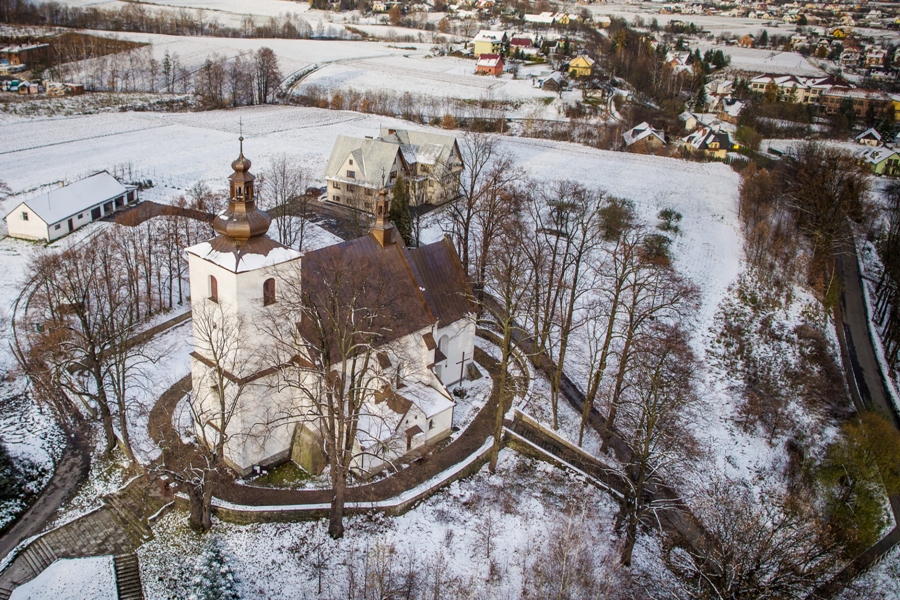
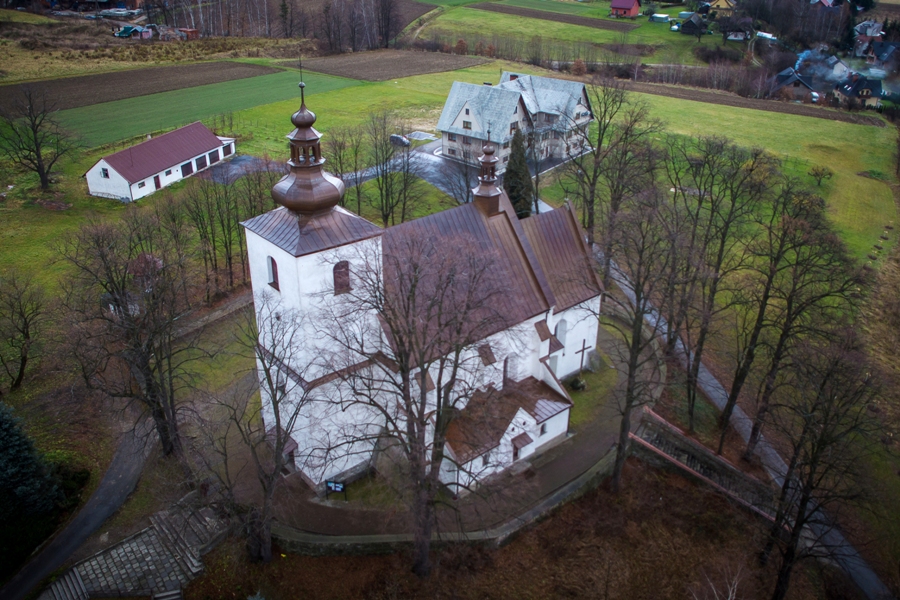
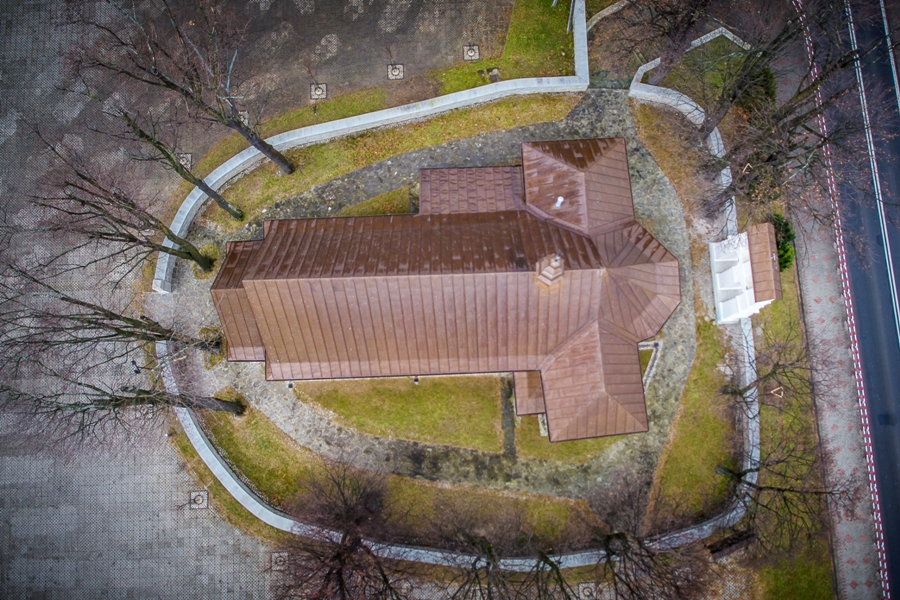
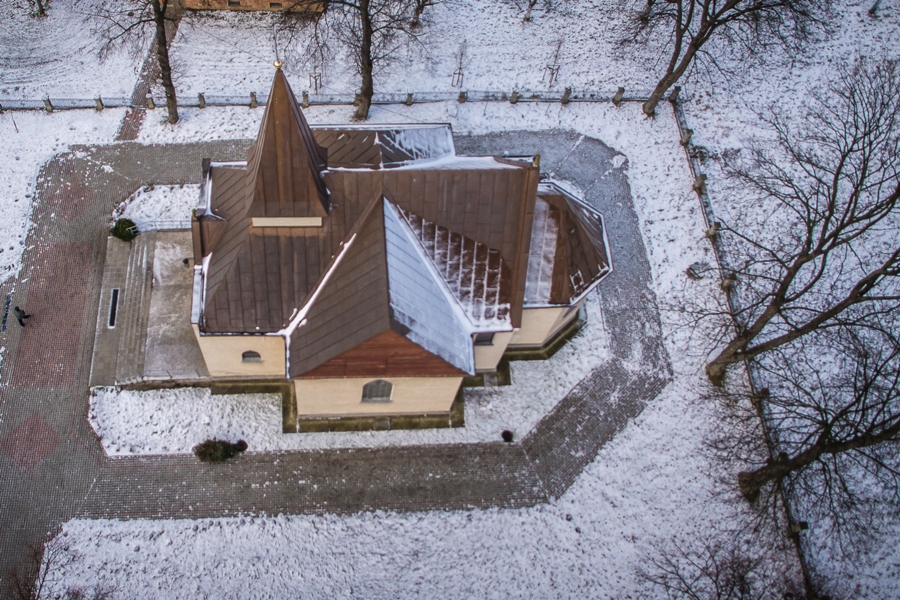
Of course, from bats’ point of view, more important than what they see (or rather observe with their ears) are the conditions under the roofs.
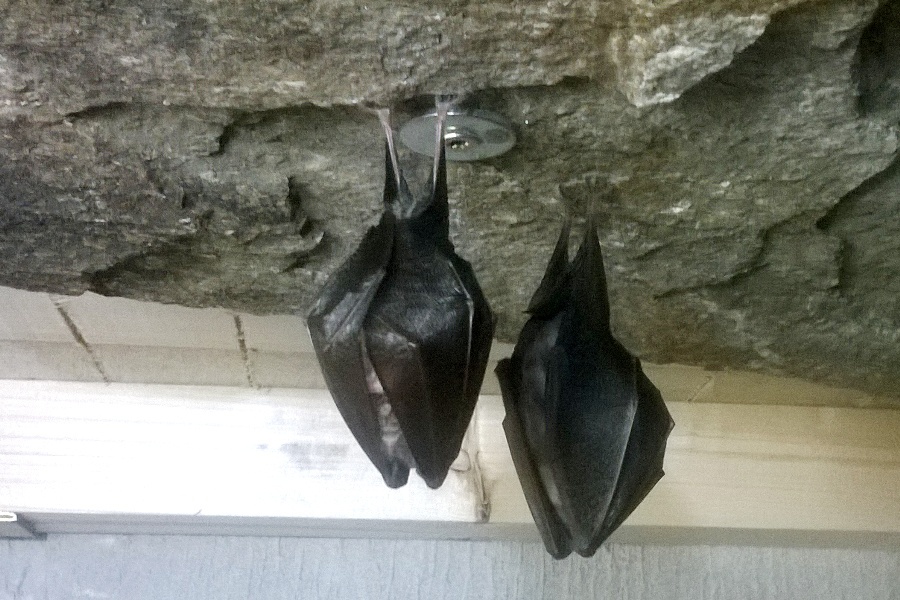
Until now, there was no case of bats abandoning the renovated roost. Moreover, they readily use the installed improvements. This may be observed directly or through the traces they leave, like concentration of guano under the shelter installed in the attic. They are happy to hang on the special stones installed for them or inside shelters preventing the draughts.
Sometimes bats discover their own way to use the installations. For instance, in Jaworki, during hot days, when the temperature under the roof is too high even for them, the bats hide under the guano platform, where it is much cooler. From this year on, they may also use the stone tower as a cool room. It was too much light for the bats until recently. The dark screens installed in front of the tower windows baffle the light creating nice darkness inside the tower.
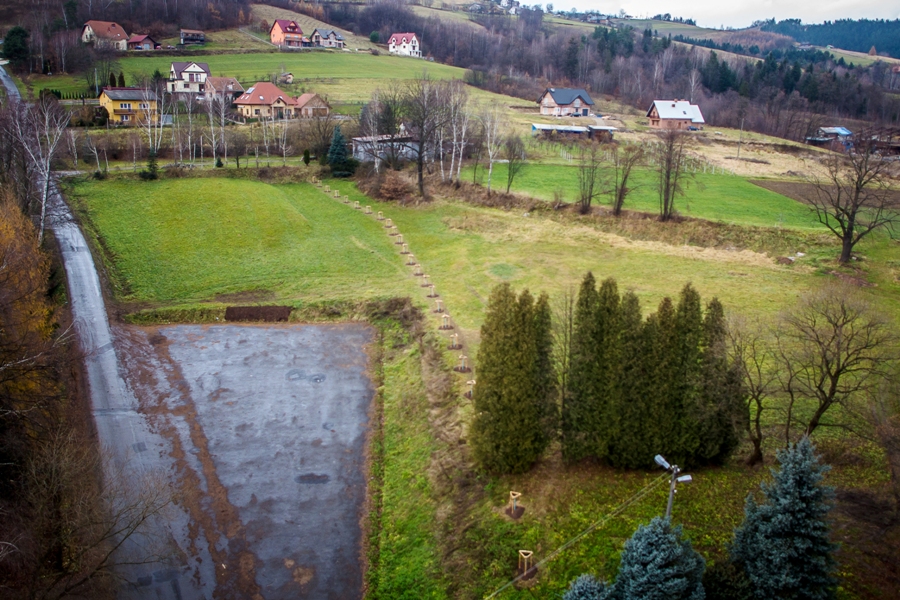
From above it is easier to see the role of tree planting, also part of the Podkowiec+ project. Bats go along the lines of trees or hedges to their feeding grounds. Just to remind: for the lesser horseshoe bats open spaces are a hostile area, and they try to avoid it as much as possible, rarely flying further away than 1,5m, from the shelter provided by plants.