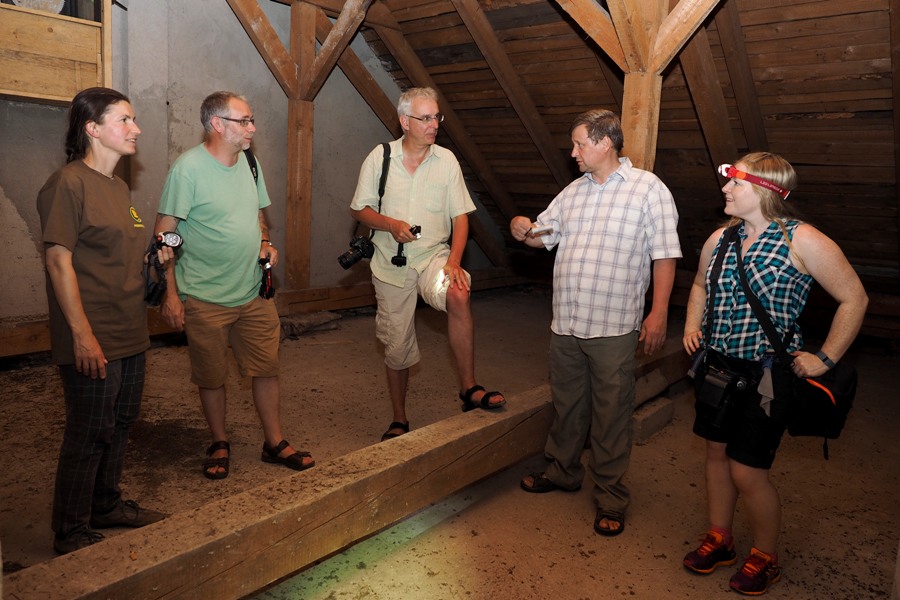
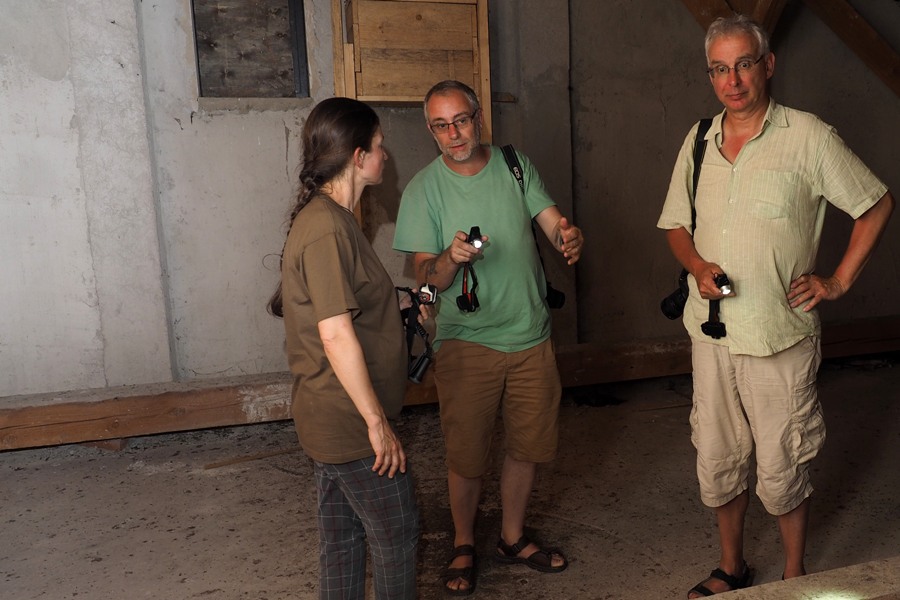
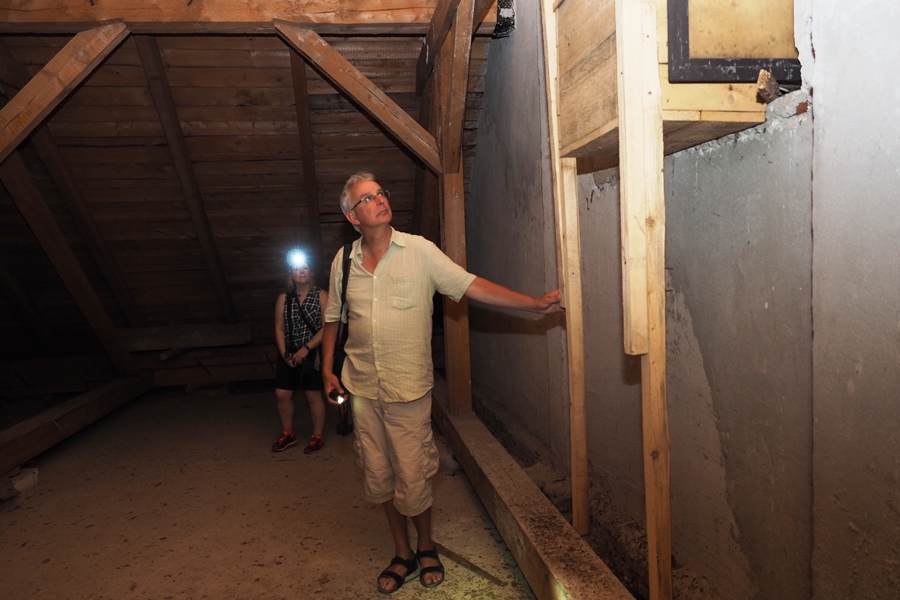
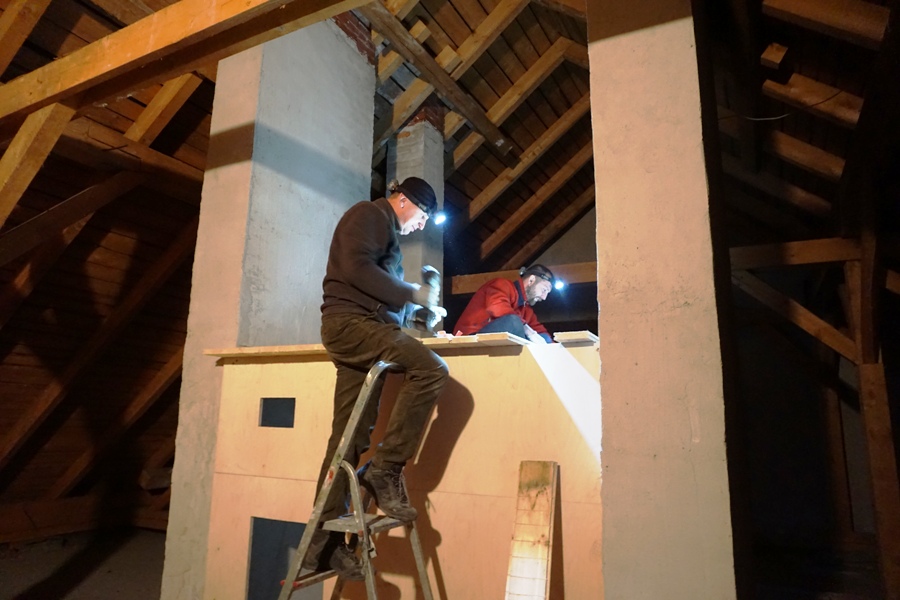
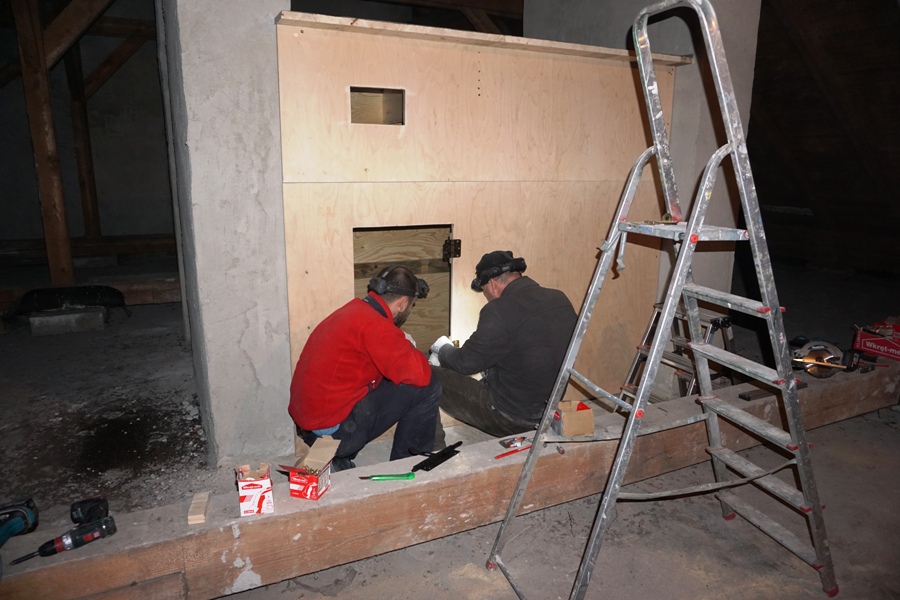
A set of simple measures has been planned for the sake of the horseshoe bats. In one of the windows, an inlet opening has been made, making access directly to the darkened part. Horseshoe bat droppings were brought from another colony to encourage the bats that would enter the space to feel familiar and stay in. The bats started to use the space.
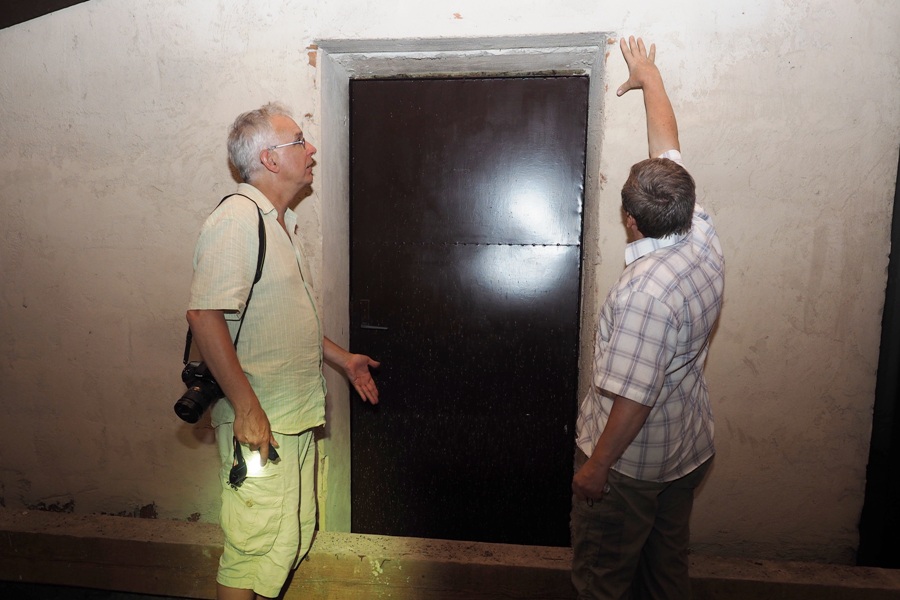
While the experts from the Vincent Wildlife Trust visited the site to see the results of the to-date progress, we had the opportunity to analyse the tracks of bat presence and plan further improvements. Basing on this findings, we planned to install a special dark chamber, that will reduce light and draughts, and a simple screen over the unused doors, closed because of the bats, where they apparently hanged.
After the first Lesser horseshoe bat appeared in 2008, the numbers grow slowly but steadily. In 2012 the first females with offspring were noticed, making the roost a nursery colony, and in 2015 there were already 10 adults, 7 of them with young. Despite the still small numbers, the example shows that it is possible to create a new roost from null, by providing the bats with the proper, acceptable by them, conditions.
This is a success story showing good cooperation between an ngo and conservation administration. The work engaged Mr Bogusław Kozik from the National Park and Rafał Szkudlarek from Pro Natura.
In the name of horseshoe bat we would like to thank the National Park Directorate.