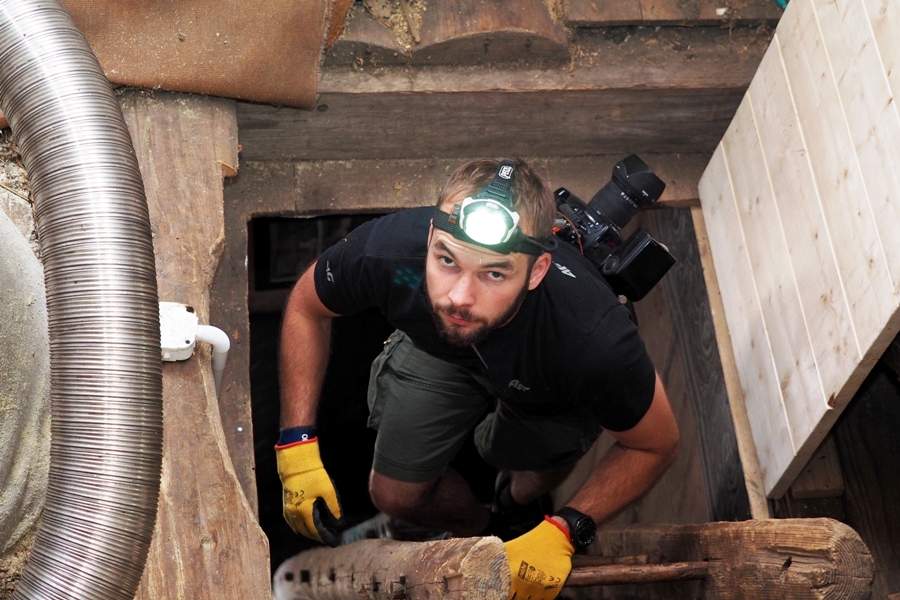
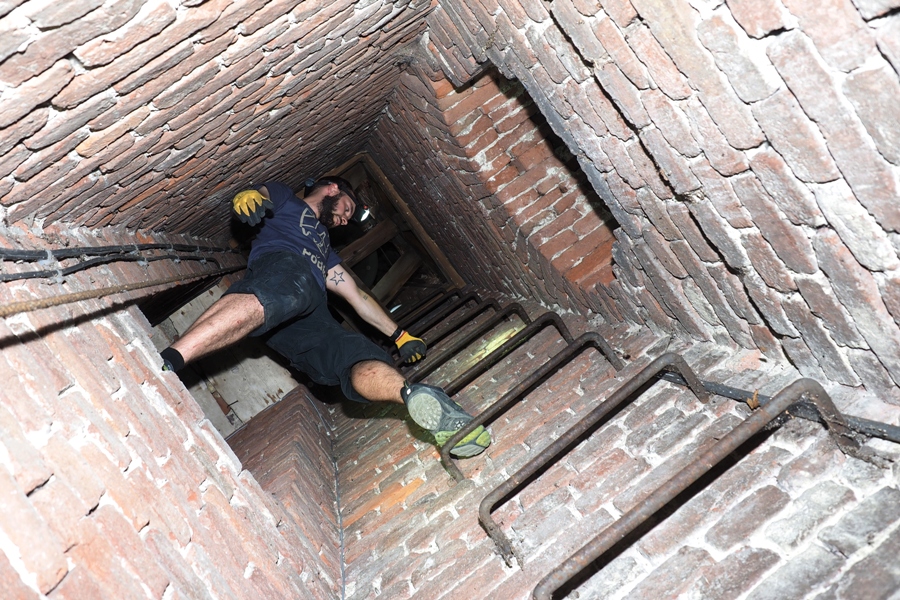
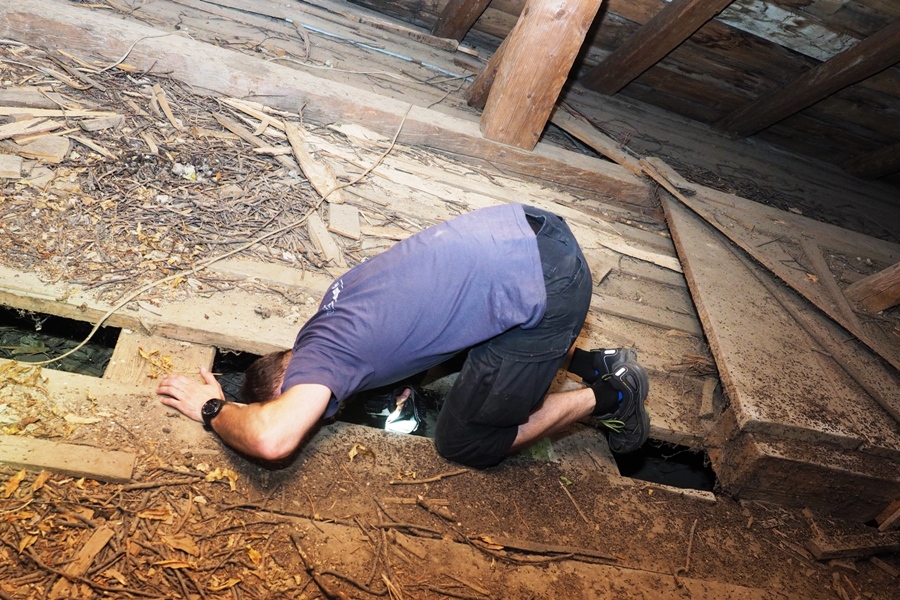
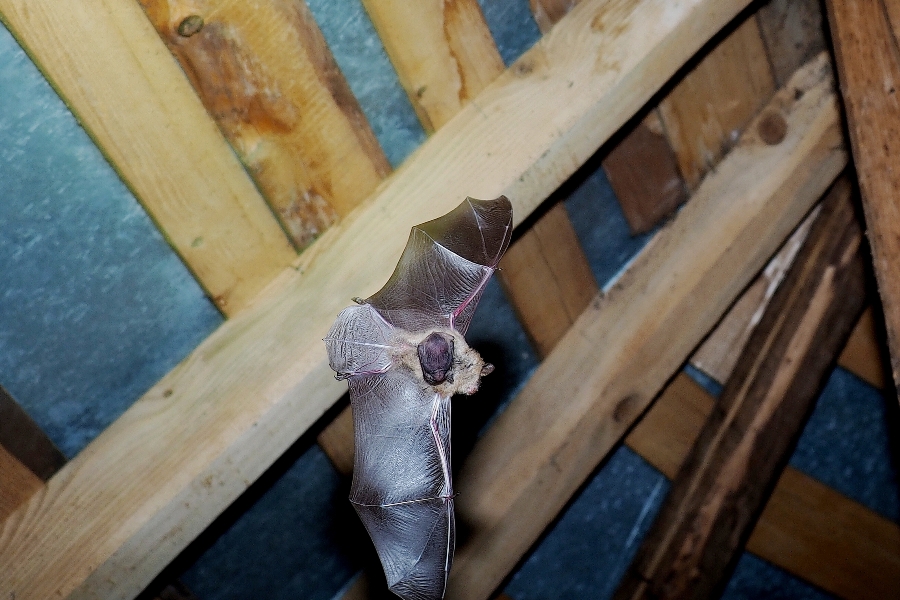
That’s why LIFE Podkowiec+ team members visit over 100 objects inhabited by bats. It requires climbing to the attics and towers, searching under the floor and into the cellars, both inside the roost buildings and hidden nearby the colony. Bats use different parts of the buildings, adjusting their choice mainly to the weather. They love warm, but it is sometimes too hot even for them, and they seek for a cooler place to hide from the heat.
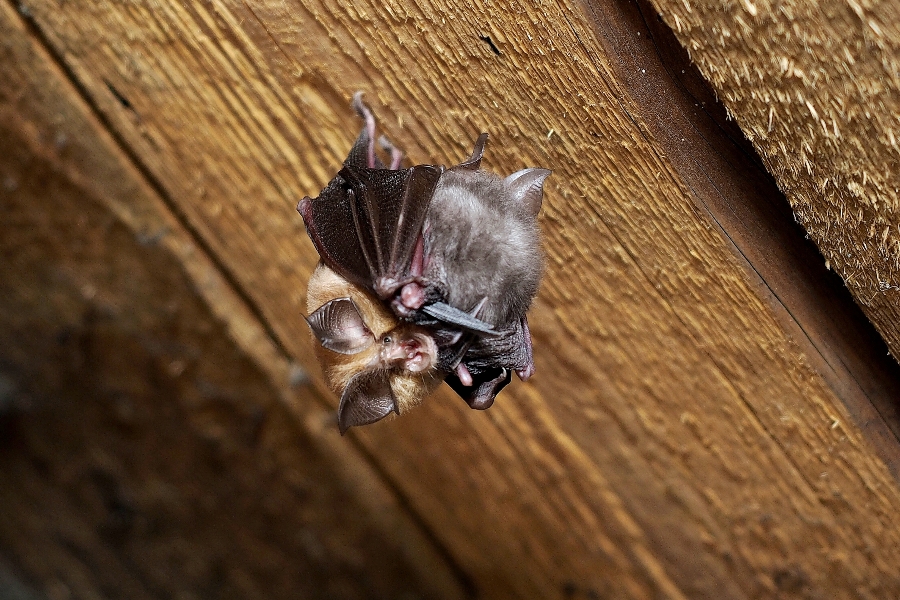
It is too early for final estimates and conclusions, but it seems that the Lesser horseshoe bats in the checked colonies is good. All the colonies exist, some grow in numbers and the offspring has been recorded. The surveyors recorded also other bat species, among them the long-eared bats, famous for their huge ears.