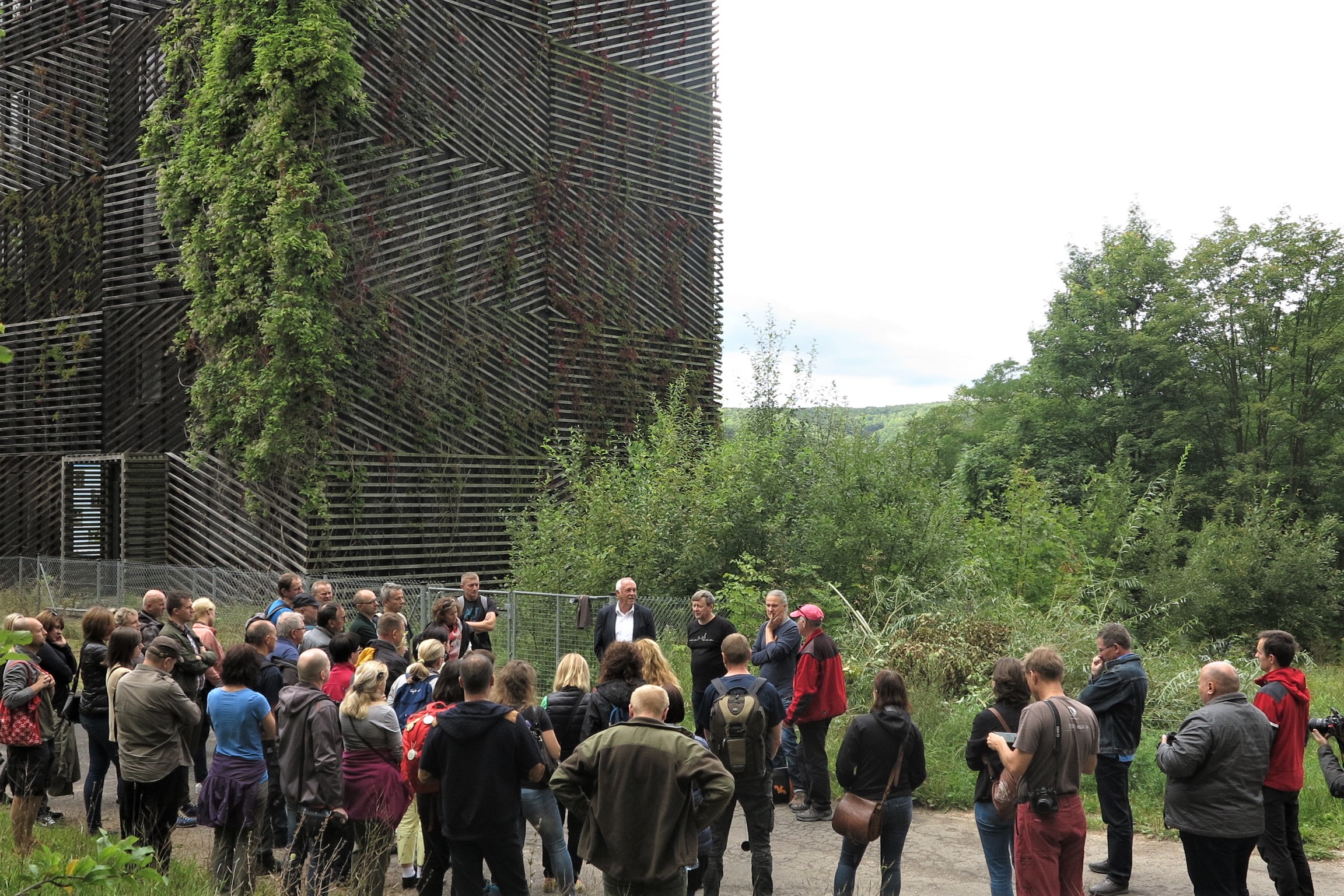
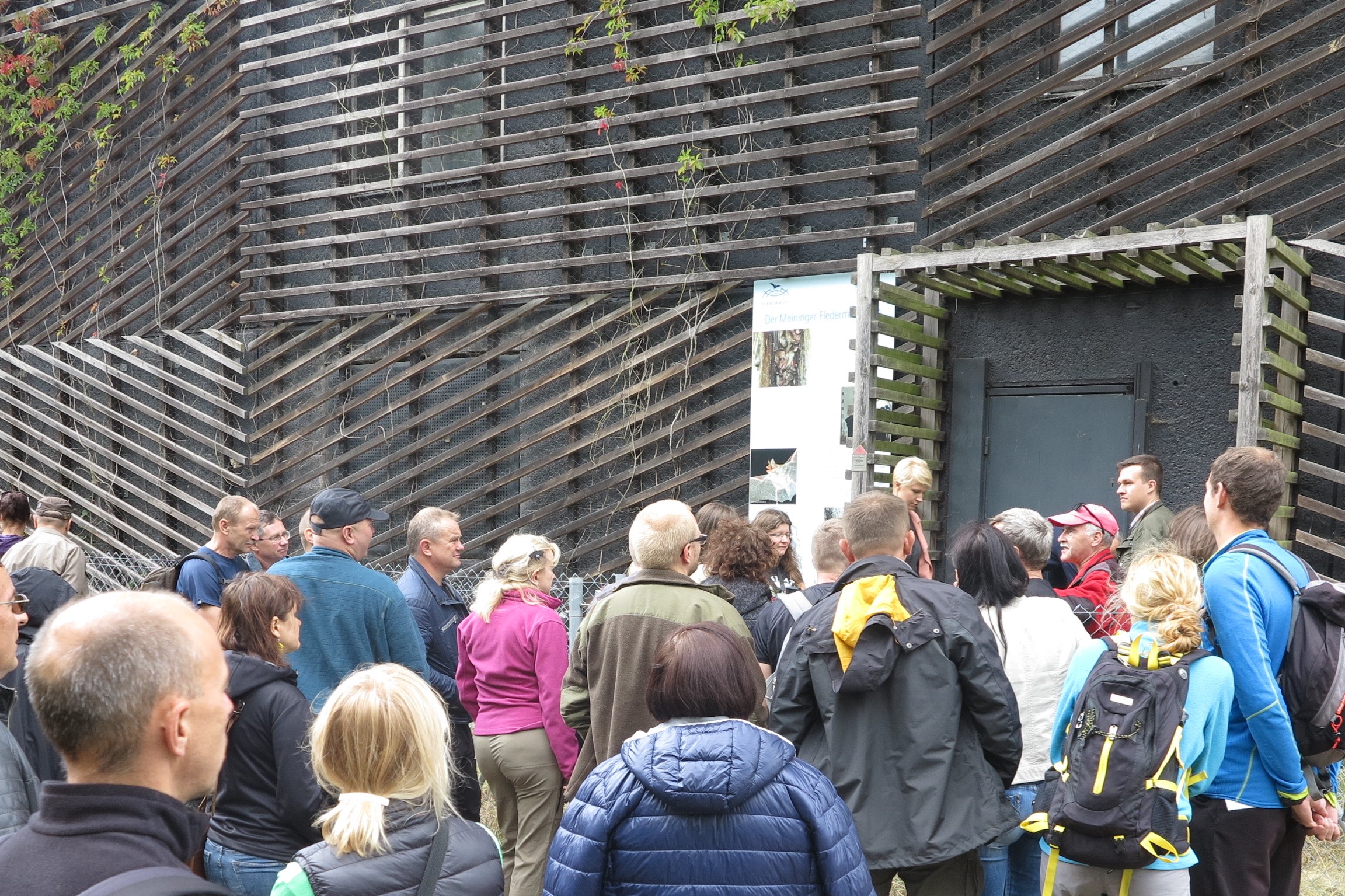
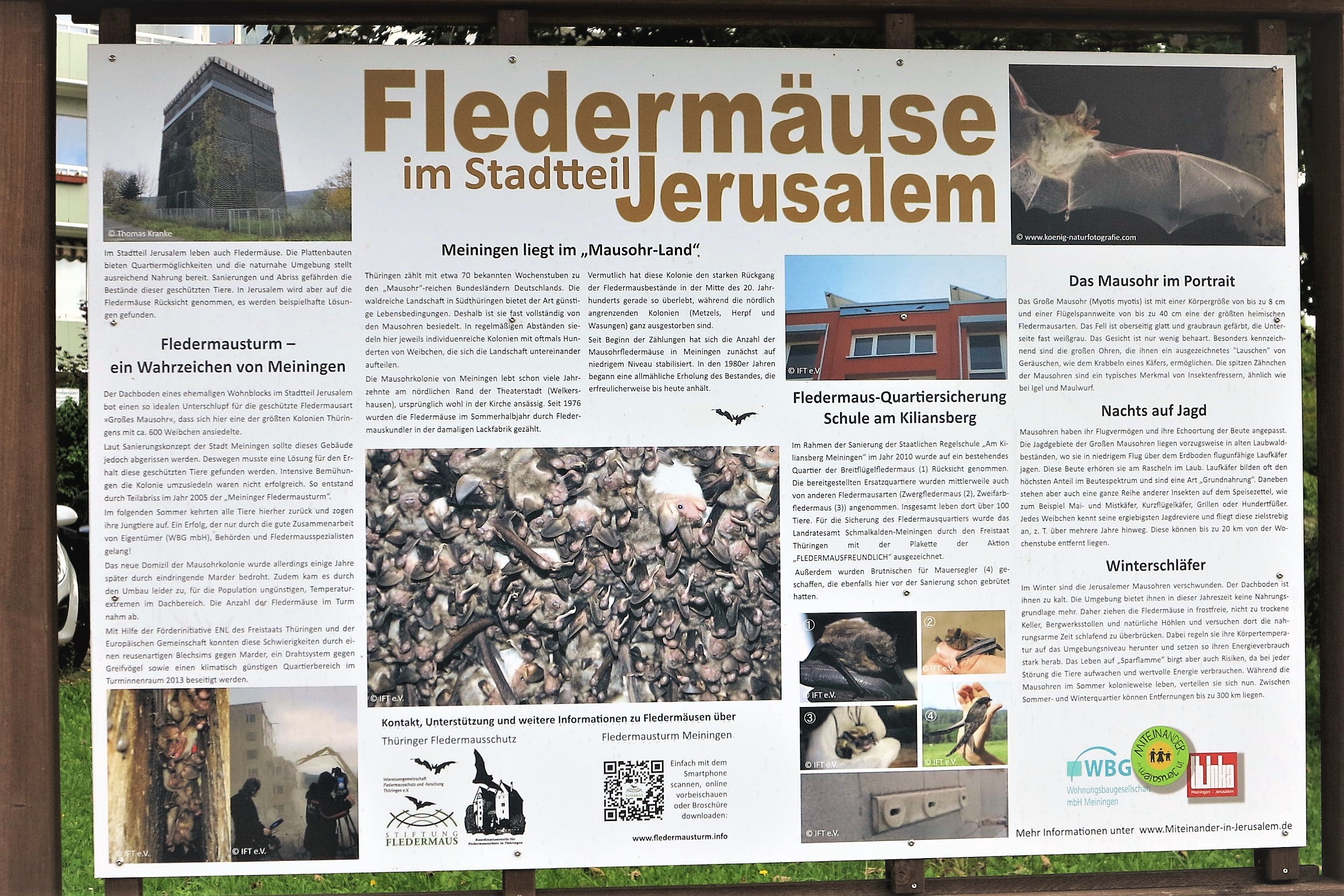
The main reason to visit Meiningen in southern part of Thuringia, was the Fledermausturm, the Bat Tower.
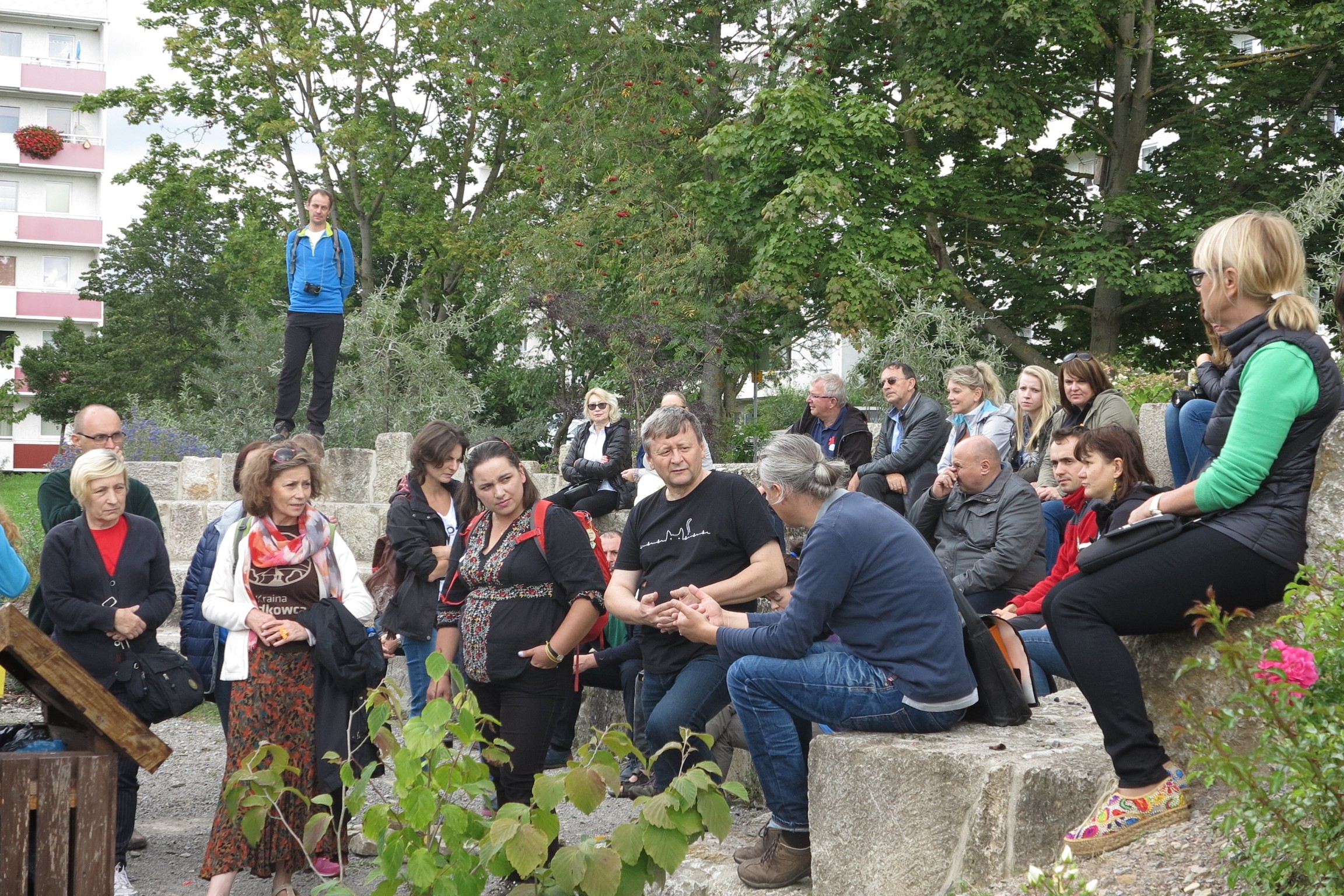
Mr Albrecht Volker, President of the housing cooperative and Wigbert Schorcht, bat researcher talked about the history of the site. The case became famous. There was even a short chapter about it in the book presenting conservation of nature in towns across the world.
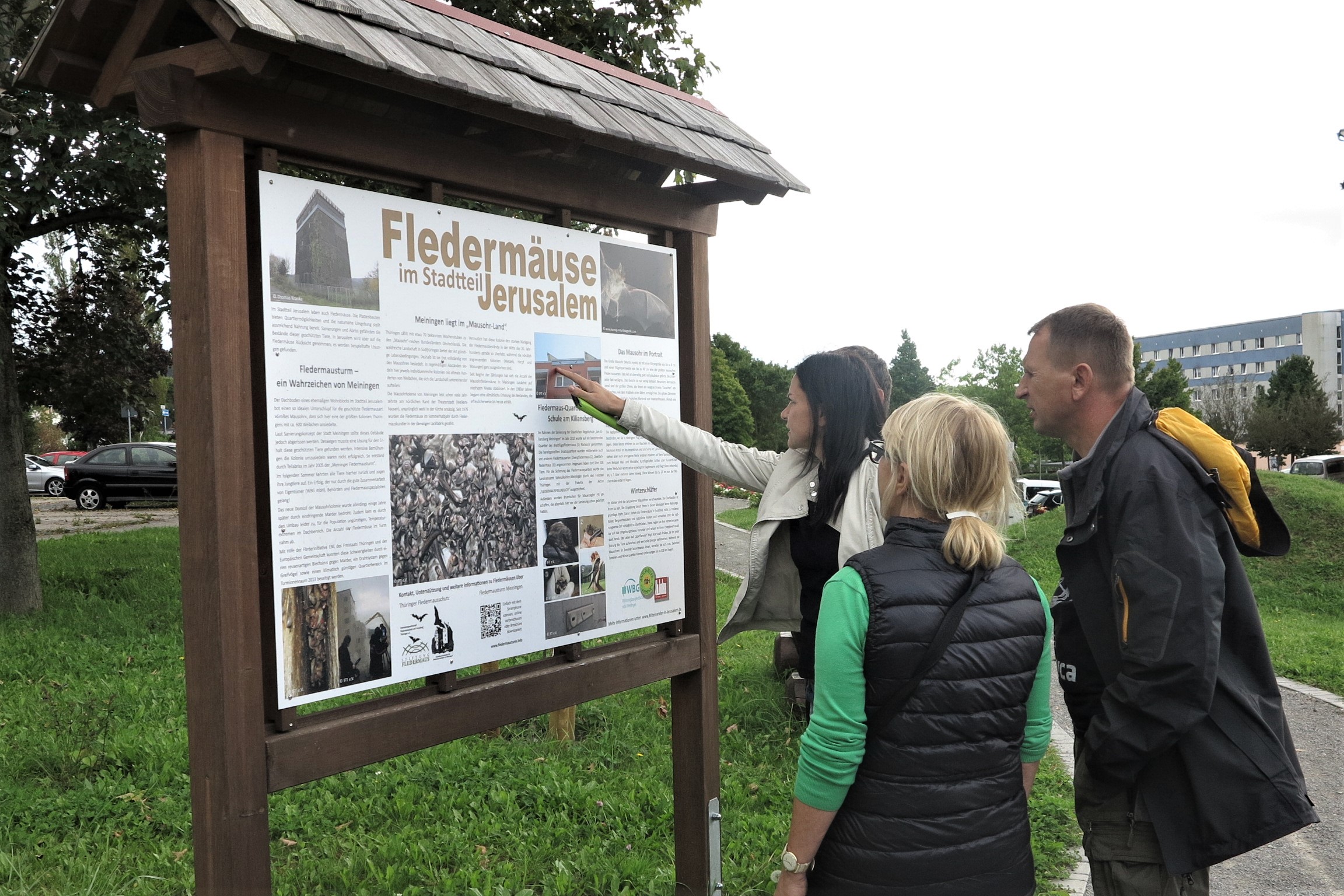
The tower is located in a block of flats district of Meiningen called Jerusalem. After the political changes, many block districts in East Germany have been left by its inhabitants, moving away in search for work, and the deserted blocks started to dilapidate. In one of the blocks, which was meant for demolition, a large colony of the greater mouse-eared bat had been found. Several attempts to encourage bats to re-settle to new sites prepared for them, proved to be unsuccessful. The species is known for its conservative approach. They not only use the same sites but even the same openings to enter the roost.
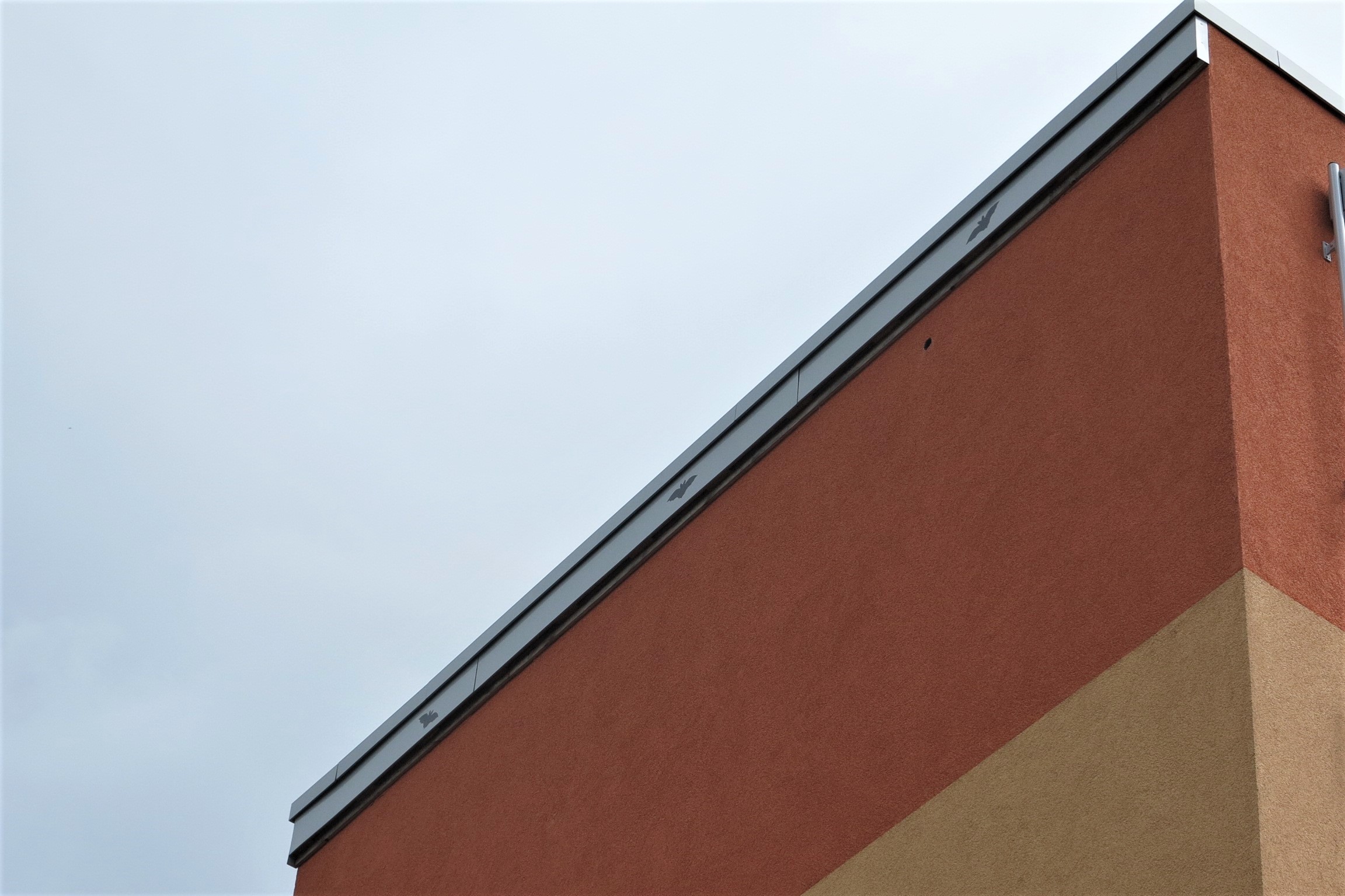
The solution that was chosen in such situation was to leave a part of the building, where the bats resided. The excellent work done by the local and regional media brought a lot of support, attention and pride among the local community. Art students designed the tower outside. The cooperative arranged a nice public garden in the place remained after demolition of another building. In the local school heat insulation project, several improvements for bats have been put in place. Over all the years since, no act of vandalism has been recorded.